
10 Wonders of the World - 10 Best Airports - 10 Best Cities - 10 Best Lakes
Inca Ruins - Manchu Picchu, Peru
Machu Picchu, The lost city floating in a kingdom of clouds, high in the Andes Mountains of Peru, a mysterious settlement that the Incas built, occupied, and deserted, all in less than a century. For hundreds of years the city was hidden in the jungle. Then, in 1911, Hiram Bingham led a university expedition to the Peruvian Andes. On a valley floor along the Urubamba River, he met a farmer who guided him up to the ruins of the hidden city, the only Incan site that hadn't been looted or destroyed during the previous four centuries.
The Galápagos Islands, Ecuador
Machu Picchu, The lost city floating in a kingdom of clouds, high in the Andes Mountains of Peru, a mysterious settlement that the Incas built, occupied, and deserted, all in less than a century. For hundreds of years the city was hidden in the jungle. Then, in 1911, Hiram Bingham led a university expedition to the Peruvian Andes. On a valley floor along the Urubamba River, he met a farmer who guided him up to the ruins of the hidden city, the only Incan site that hadn't been looted or destroyed during the previous four centuries.
The strange, conspicuously adapted wildlife that impressed Charles Darwin when he visited the Galápagos Islands in 1835—and that would later kindle his discovery of the process of evolution by natural selection—is still there. In fact, the Galápagos, 14 major and many smaller islands spanning the Equator 620 miles off the coast of Ecuador, remains the world's most biologically intact tropical archipelago.
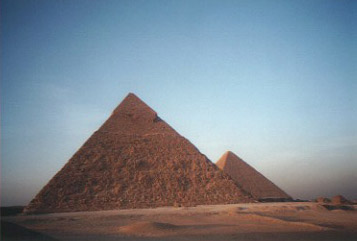
The Pyramids and the Sphinx, Egypt
One of the Seven Wonders of the World, the Great Pyramid of Giza.
. The Great Pyramid of Khufu (or Cheops)
. The Pyramid of Kafhre
. The smaller Pyramid of Menkaura.
. There are three main pyramids in Giza:
Each Pyramid is a tomb to a different King of Egypt. In front of the pyramids lies the Sphinx (or Abu al-Hol in Arabic, "Father of Terror"). Carved out of a single block of stone, this enormous cat-like sculpture has mesmerized millions of visitors.
Grand Canyon, USA
The 6,000-foot-deep, 277-mile-long and 18-mile-wide chasm nearby looked like an ocean masked by the dark. Come morning, watching the sun rise over the whittled canyon was as mesmerizing as watching waves roll in. But just as you can't grasp the size of the swells without swimming, you can't comprehend the depth of the rust-colored canyon until you venture down into it—and hike rim to rim.
Angkor Wat, Cambodia
Angkor Wat is a temple complex at Angkor, Cambodia, built for the king Suryavarman II in the early 12th century as his state temple and capital city. As the best-preserved temple at the site, it is the only one to have remained a significant religious centre since its foundation – first Hindu, dedicated to the god Vishnu, then Buddhist. It is the world's largest religious building. The temple is at the top of the high classical style of Khmer architecture. It has become a symbol of Cambodia.
Santorini, Greece
Santorini is a group of islands in a circle about 10 KM across – the rim of a large volcano that is still producing small islands in the centre. Settlements are scattered around the islands as a series of small villages. The famous white buildings are huddled close to one another on and over the cliff of the central caldera. Hiking paths and trails lead all over the island, but an interesting time can be had walking the paths that connect the settlements, talking to the friendly locals and exploring the shops.
Stonehenge, England
Stonehenge is considered one of the most archaeologically rich sites in Europe, with many Neolithic and Bronze Age finds. From about 2500BC, Neolithic and Bronze age man started to bring Bluestones and Sarsen stones from Wales and the Marlborough Downs, it was completed in 1600BC. A nearby hill fort was built during the Iron Age, and there is evidence to suggest that the area was extensively settled by the Romans.
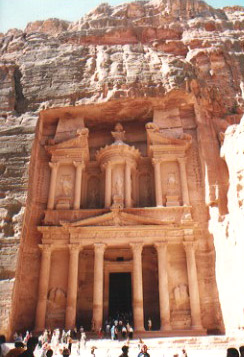
Petra,Jordan
Petra is a historical and archaeological city in Jordan, famous for its rock cut architecture and water conduits system. Established sometime around the 6th century BC as the capital city of the Nabataeans, it is a symbol of Jordan as well as its most visited tourist attraction. It lies on the slope of Mount Hor in a basin among the mountains which form the eastern flank of Arabah (Wadi Araba), the large valley running from the Dead Sea to the Gulf of Aqaba. Petra has been a UNESCO World Heritage Site since 1985.
The site remained unknown to the Western world until 1812, when it was introduced by Swiss explorer Johann Ludwig Burckhardt. It was described as "a rose-red city half as old as time" in a Newdigate Prize-winning poem by John William Burgon. UNESCO has described it as "one of the most precious cultural properties of man's cultural heritage."[4] Petra was chosen by the BBC as one of "the 40 places you have to see before you die".
Pompeii, Italy
Pompeii's history reads like a Greek tragedy. Settlers originally flocked to the site of the Roman port city because of its fertile soil—the product of volcanic ash from nearby Mount Vesuvius. Yet that very same volcano would erupt and doom the city of 10,000 to 20,000 inhabitants in A.D. The eruption buried Pompeii under 4 to 6 meters of ash and pumice, and it was lost for over 1700 years before its accidental rediscovery in 1749. Since then, its excavation has provided an extraordinarily detailed insight into the life of a city at the height of the Roman Empire.
The Golden Temple, Japan
The pavilion is probably the most recognizable temple in Japan as it is entirely covered in gold. Shining in the light, the Golden Pavilion, or Kinkakuji, looks like beautiful jewel box. In 1950, a disturbed Buddhist temple novice burned the 14th-century pavilion to its foundations. Within five years, however, the Golden Pavilion rose again. On the new roof, appropriately, perches a phoenix. The pavilion was originally built as a retirement villa for the shogun Ashikaga Yoshimitsu, who, after withdrawing from public life, exercised power in the background by installing his ten-year-old son as shogun.
Incheon International Airport
Incheon International Airport is also currently Asia's eighth busiest airport in terms of passengers, and the world's eighth busiest airport in terms of international passengers in 2010.
The airport has a golf course, spa, private sleeping rooms, ice skating rink, a casino, indoor gardens and a Museum of Korean Culture. Although it has top class amenities, it still lacks the coziness of Singapore Changi Airport.
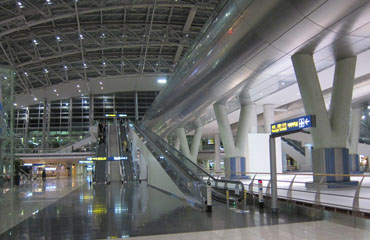
Singapore Changi Airport
Singapore Changi Airport is a major aviation hub in Southeast Asia. It is the seventh busiest airport, and the second busiest in Asia by international passenger traffic. The airport has won over 390 awards since 1981, including 23 'Best' awards in 2011. Changi Airport's efforts to counter the onset of age include periodic physical upgrades to its existing terminals and building new facilities.
Hong Kong International Airport
Hong Kong International Airport is colloquially known as Chek Lap Kok Airport is built on the island of Chek Lap Kok by land reclamation. In 2011 it handled more than 50 million passengers, making it the 10th busiest airport worldwide by passenger traffic. The airport is an important gateway for destinations in Mainland China and the rest of Asia.
Amsterdam Schiphol Airport
Schiphol is an important European airport, ranking as Europe’s 4th busiest and the world's 14th busiest by total passenger traffic in 2011. It also ranks as the world’s 6th busiest by international passenger traffic. Schiphol has a large shopping area served as a source of revenue and as an additional attraction for passengers.
Beijing Capital International Airport
Beijing Capital International Airport is currently the second busiest airport in the world ( 2011) in terms of passenger traffic. Currently, it ranks as the world’s 6th busiest by international passenger traffic. To accommodate the growing traffic volume, Beijing Capital added the enormous Terminal 3 in 2008 in time for the Olympic Games, the second largest airport terminal in the world after Dubai International Airport's Terminal 3, and the fifth largest building in the world by area.
Munich Airport
Munich Airport is the second busiest airport in Germany in terms of passenger traffic behind Frankfurt Airport, and the sixth busiest airport in Europe. It is the 27th busiest airport in the world in 2011. The Munich Airport Centre has a shopping, business and recreation area that connects its two terminals.
Zurich Airport
Zurich Airport, also known as Kloten Airport, is Switzerland's largest international airport. The airport lost a lot of traffic when Swissair shut down its operations. Since Lufthansa took over its successor Swiss International Air Lines (SWISS), traffic has started to grow again. Zurich Airport handled more than 24 million passengers in 2011.
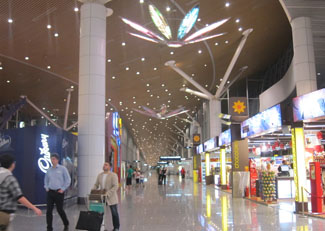
Kuala Lumpur International Airport
The airport is ranked the 14th busiest airport in the world by international passenger traffic, and is the 5th busiest international airport in Asia. Wireless internet (Wifi) is provided free of charge within the terminal. The terminal also has prayer rooms, showers and massage service. There is also a natural rainforest in the middle of the terminal, exhibiting the Malaysian forests.
Vancouver International Airport
The airport has won several notable international best airport awards. Due to its proximity to Asia in relation to the rest of Canada and North America, Vancouver International Airport is the major gateway between Canada and Asia. It has more transpacific flights than any other airport in Canada. Free high speed Wi-Fi internet access is available in the International and Domestic Terminals.
London Heathrow Airport
iHeathrow is the busiest airport in the United Kingdom and the third busiest airport in the world in terms of total passenger traffic in 2012, handling more international passengers than any other airport around the globe. The busiest single destination in terms of passenger numbers is coming from New York, with over 3.8 million passengers travelling between Heathrow and JFK / Newark airports in 2011.
Sao Paulo, Brazil
Sao Paulo is one of those cities that really does have something for everybody. Starting with the food, you have great sirloin at the churrascarias and incredible sushi and fresh pasta at, really, anywhere in the city. As for the nightlife, what is it you're looking for? Head to bohemian Vila Madalena for a beer or go to Itaim Bibi for more of a lounge or club scene. Try Barra Funda for prime electronic clubs or a more alternative spot. Rua Augusta is the eclectic type's dream. In a single block, you'll find a trendy lounge, dirty dive bar, gay club, and strip joint.
There are events galore in Sao Paulo. From Virada Esportiva, a weekend in November when free sports activities are offered, to major events like the Formula 1 Grand Prix (November 27th) and the Sao Silvestre run (December 31st), an end-of-the-year 15k, you have non-soccer sports covered. And with three major soccer teams, there is never a dull week for futebol.
Berlin, Germany
It's in the springtime -- as the first sunbeams hit the city's wide streets, pushing the locals out of their shells -- that Berlin really comes into its own. Sidewalk cafes pop up left and right, and city parks perk up with the smell of barbecues. Contrary to the stuck-up (or boozy) German stereotype, Berliners are casually sophisticated -- "poor but sexy," as the unofficial city slogan boasts. The patchwork infrastructure left after WWII's devastation, the Cold War's forced division and the post-reunification construction boom have enabled clubs, bars and stores to creep into the strangest accommodations, and galleries are still popping up off un-renovated courtyards and in basements every week.
Barcelona, Spain
Arguably edgier and more bohemian than Madrid, Barcelona is Catalonia's bastion of urban cool. And as you'd expect from a city that enjoys a warm Mediterranean climate, living takes place very much outdoors. From dining on tapas alfresco on La Rambla to basking in the sun on Barceloneta, out is the new in, and being cooped up in Gaudi-inspired, Gothic-style buildings (however breathtakingly beautiful) is only for the old, retired or, dare we say it, muertos. When it comes to explorability, it doesn't get better than Barcelona. With everything from wide, tree-lined boulevards to narrow cobblestone streets, pedestrians need only take a stroll to soak up the city's stunning aesthetic.
New York City, USA
New York can be anything to anyone: More than 48 million people visited the Big Apple in 2010 to experience the city's famous energy. But on the ground, it's clear that people come here to eat, take in some culture, and go out big at night -- the same things locals do, really. Chefs and bartenders are household names, even outside the industry. Mario Batali's Eataly may just be the fanciest bazaar in the world, and visitors will brush shoulders with locals at the emporium's new rooftop beer garden over Madison Square Park this summer. On the culture front, the populist and highbrow are similarly appealing. The South Park guys have a musical (The Book of Mormon) up on Broadway, the Tribeca Film Festival is celebrating its 10th anniversary and Fashion Week's new Lincoln Center digs bring two of the city's strengths - fashion and performing arts - together in one place.
London, England
London's the land of black cabs, big red buses and Big Ben. You only need to drive through Britain's fair capital to soak up its rich cultural heritage; from imposing architecture such Buckingham Palace and St. Paul's, the city's past is etched into its grand facade. But it isn't all about buildings. History is in its cobbled streets, its city-center parks, its museums, galleries and monuments, and like New York City, its diverse mix of people. It's free from the repetitive grid system like New York. You'll undoubtedly get lost, which makes it all the more thrilling. But with black cabs and double-deckers at every turn, as well as an underground system that will whiz you from the genteel environs of the West to the hip and gritty East in less than 30, you'll never be left stranded.
Seoul, South Korea
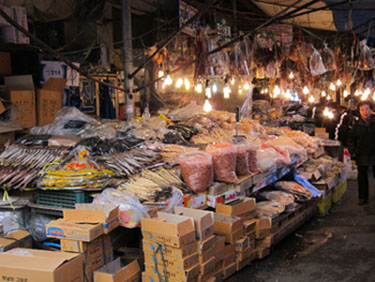
It can be easy to forget Seoul, what with the buzz of Japan to the east, the might of China to the west and the madness of Kim Jong-il to the north. But savvy travelers have long known that the Korean capital has plenty to offer the hungry, the thirsty and the active among us -- and at a great price, too. For travelers in the daytime hours, it's a time to check out the hundreds of temples and palaces dotting the city or to trek up to N Seoul Tower, the giant needle that overlooks the metropolis. It's also time to get your shop on, with all the action in the trendy Itaewon and Insadong areas. There's always something happening at night, when all those students drink their grades away at the Western-style bars in Itaewon or the local nightclubs in Hongdae.
Paris, France
There is more to the French capital than the Eiffel Tower, Chanel and the Champs-Élysées. Paris is one of the most culturally rich cities on the planet, with art aplenty at the Louvre, awe-inspiring architecture at the Pantheon, and a history of fashion that can be traced anywhere from the designer-clad mannequins at Galeries Lafayette to the self-consciously chic Parisiens strolling down any one of the city's streets.Paris is a playground for those mad about food, and fabulous French fare abounds wherever you go, though those who are watching their euros should best avoid the pricey plates served up at L'Arpege, Le Cinq and Le Bristol. In terms of explorability, Paris is hard to beat. A metro system means you can get from one side of the city to the other quickly, easily and relatively cheaply, while walking along cobblestone streets hand-in-hand with a loved one is romantic, cinematic and oh-so Paris.
Melbourne, Australia
Melbourne is the rare kind of metropolis that feels instantly intimate but also unending and intricate. It's the nooks, crannies and quirks that make Melbourne so fantastically endearing, from the internationally famed laneways that feel like your own worst-kept secret to the dynamic, bohemian bayside suburb that's two quick turns from a world-class Formula 1 circuit. As one of the most ethnically diverse cities in the world, Melbourne is a dynamic, varied gastronomic melting pot -- and a rich one at that. The well-established Italian, Greek, Chinese, and Vietnamese populations were major catalysts in the city's culinary maturation, and today Melbourne is undoubtedly the gastronomic hub of Australia.
Bangkok, Thailand
The historic center, gently sprinkled with gorgeous temples, is not just for strolling around. The biggest temple, Wat Pho, may have the 150-foot-long Reclining Buddha, but it also has a completely un-sketchy massage school, where $30 buys you three hours of pleasant back-breaking relaxation. Other walks take you up to Golden Mount's view or around Phraeng Phuthon Square, which boasts nil tourists and two of the city's best streetside restaurants. The Sukhumvit district offers a shopper's paradise, with high-tech malls sandwiched between sprawling food markets, all easily navigable on foot or via the clean metro. Many men seek out the salacious pleasures of Sukhumvit Soi 11, but in nearby Soi Thonglor, a street simply teeming with nightlife, are popular clubs like Demo and Muse, as well as Fat Gut'z, a bustling jazz and blues joint.
Mexico City, Mexico
Mexico's capital is the ultimate mash-up: a city where the new collides with the ancient, steel and glass towers soar over colorful traditional taquerias, Catholicism feeds off and into Aztec mysticism, and high art duels with Mexi-kitsch naco for popularity. It's not the first city to liberally mix cultures and time periods into its particular melting pot, but Mexico City's results are certainly some of the most alluring. Just 30 miles north and anchored by the well-preserved ruins of two huge pyramids is Teotihuacan, the ancient capital of a vast pre-Columbian empire that once stretched as far south as Guatemala and now is one of North America's best archaeology sites. Tourists are catching on fast, so 2011 is the perfect time to beat the crowds to Cinco de Mayo (May), Gay Pride (June), the Revolution Day Parade, or Dios de la Muerta (both November).
